
What Are Fleet Dash Cams? A Guide for Fleet Operators
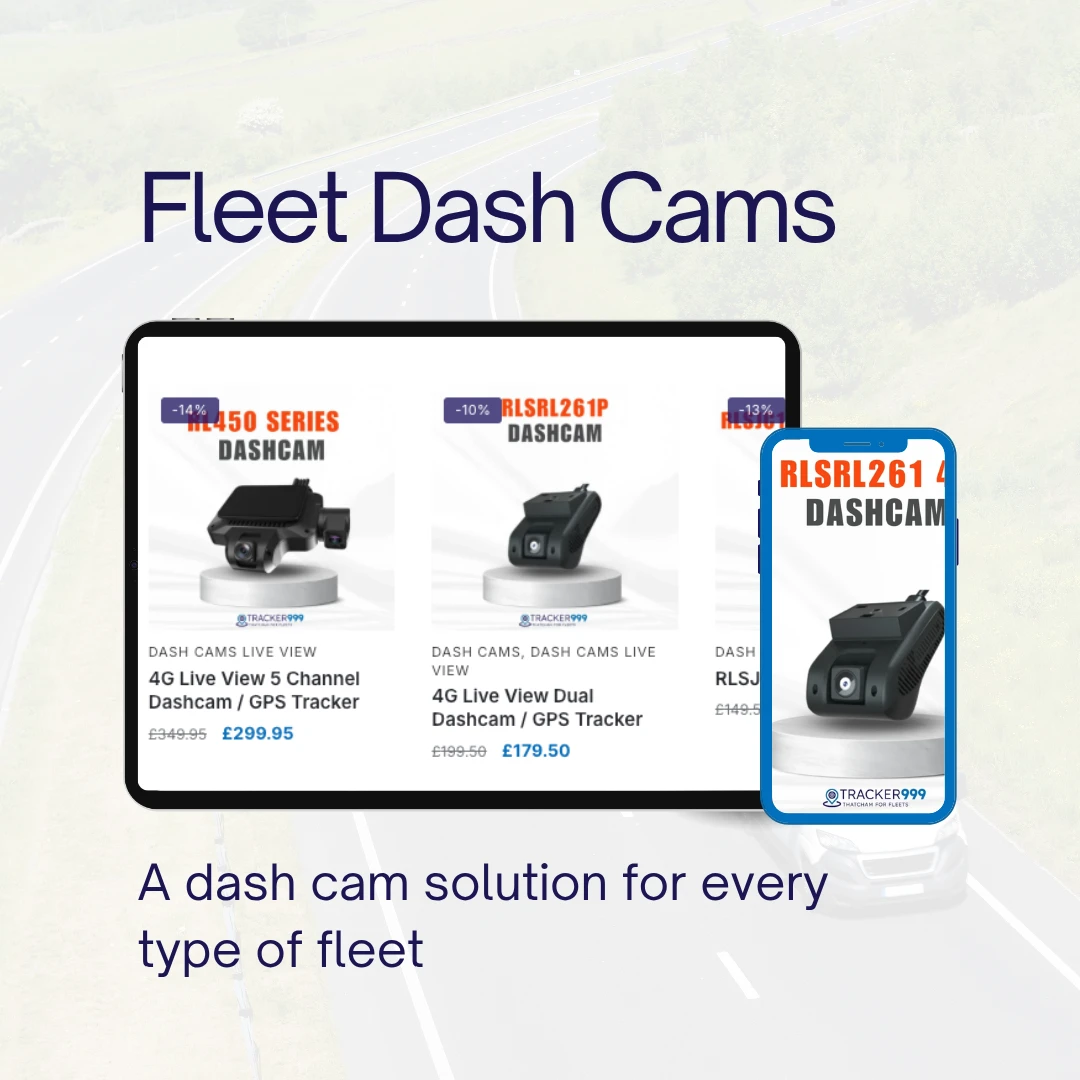
Dash cams are now standard equipment across well-run commercial fleets in the UK, yet there is a significant difference between a consumer dash cam and a properly specified fleet system. This guide explains what fleet dash cams are, the main types available, the benefits they deliver and the common pitfalls to avoid when choosing a system for your vehicles.
Key takeaways
- Fleet dash cams are hardwired camera systems designed for commercial vehicles, not removable consumer units managed by the driver.
- The three main types are forward-facing cameras, cabin view cameras and dash cams with live view.
- Clear footage speeds up insurance claims, defends drivers against false allegations and supports driver training.
- Insurers often offer discounts for camera-equipped fleets, and fewer incidents mean less downtime and lower repair costs.
- Poorly specified systems lead to grainy footage, driver pushback and ongoing maintenance problems, so specification matters as much as price.
What are fleet dash cams?
Fleet dash cams are camera systems designed specifically for commercial vehicles, with features that go well beyond simply protecting drivers from false claims. Unlike personal dash cams, which are often removable and managed by the driver, fleet dash cams are hardwired into the vehicle in a one-time installation, so they work reliably without any driver intervention. Modern systems support real-time monitoring, in-cab alerts and integration with fleet management software, and most provide cloud connectivity with encrypted data storage to help operators meet GDPR requirements.
How they differ from consumer dash cams
- Hardwired power means there is no reliance on a driver remembering to plug a unit into the cigarette lighter socket.
- Footage, health status and settings are managed centrally rather than by each driver.
- Professional mounting avoids the untidy cabling and poor positioning that can obstruct the driver’s view and cause problems at MOT.
- Commercial-grade hardware is built for continuous daily use across a working fleet.
Types of fleet dash cam
Forward-facing cameras
Forward-facing cameras, also known as front dash cams, are mounted near the windscreen and capture a wide-angle, high-definition view of the road ahead from the driver’s perspective. They record driving conditions, road events and incidents, which helps fleet operators prevent fraud, reduce insurance premiums and monitor driving behaviours such as following distance, lane discipline and harsh braking.
Cabin view cameras
Cabin view cameras provide clear, high-resolution coverage of the vehicle interior, both day and night, using infrared technology. They are used to monitor driver behaviour, such as distraction or fatigue, to support compliance audits, to record activity in the load space for cargo security, and to provide passenger recording in taxis, ride-share vehicles and minibuses.
Dash cams with live view
Live view dash cams stream footage over 4G so managers can see what is happening across the fleet in real time. Alongside greater visibility and control, live view helps defend against false insurance claims, supports driver training and strengthens the wider risk management strategy. These systems typically include GPS tracking, cloud storage and HD video as standard.
| Camera type | What it records | Typical uses |
|---|---|---|
| Forward-facing | Wide-angle HD view of the road ahead | Incident evidence, fraud prevention, driver coaching |
| Cabin view | Vehicle interior, day and night, via infrared | Driver behaviour, cargo security, passenger recording |
| Live view | Any connected camera, streamed over 4G | Real-time monitoring, rapid incident response, training |
The benefits for commercial fleets
Faster claims and reduced legal costs
Clear footage, combined with electronic first notification of loss (eFNOL), speeds up insurance claims, defends drivers against false allegations and helps operators avoid expensive legal disputes. Without footage, proving what actually happened often comes down to one word against another.
Lower insurance and operational costs
Insurers often offer discounts for camera-equipped fleets because the risk profile is easier to assess and claims are quicker to resolve. Fewer incidents also mean less vehicle downtime and lower repair costs across the fleet.
Accident prevention and driver safety
Dash cams encourage better driving habits and give managers the insight needed to coach drivers on risky behaviour before it leads to a collision. When an incident does occur, the footage protects the driver as much as the business, providing genuine evidence rather than assumptions.
Common problems with poorly specified systems
Many operators have had a poor experience with dash cams, and the horror stories tend to share the same root causes. Understanding them makes it far easier to specify a system that works.
- Grainy footage. Low-resolution video makes it nearly impossible to identify crucial details such as number plates after an incident, undermining the purpose of the system.
- Driver privacy concerns. Drivers can feel uncomfortable about constant monitoring and how footage might be used. A clear usage policy, GDPR-compliant storage and a focus on supporting rather than policing drivers all help build trust.
- Incompatible hardware. Some cameras are not suitable for specific vehicle models, causing dashboard errors or proving difficult to fit correctly.
- Fiddly SD cards and support headaches. Consumer-grade storage is prone to corruption, which means lost footage, downtime and a constant stream of support tickets.
What to look for when specifying a system
A good fleet dash cam system should tick every box on the following list. If a product falls short on any of them, the gap will usually show itself at the worst possible moment.
- HD recording sharp enough to read number plates in real conditions, day and night.
- Hardwired power and professional fitting by a qualified auto-electrician or accredited installer.
- 4G connectivity with cloud storage, so footage is retrievable without visiting the vehicle.
- GPS tracking integrated with the video, so every clip is tied to a location and speed.
- Encrypted data storage and access controls that support GDPR compliance.
- Proven compatibility with the vehicle models in your fleet.
- Reputable, tested hardware, ideally Thatcham approved.
With those foundations in place, drivers get clear, reliable footage when they need it, claims are resolved faster and the fleet stays compliant with GDPR and MOT requirements without anyone having to manage SD cards or chase support.
Looking to source fleet dash cam hardware?
Approved fleet operators, telematics providers and trade customers can apply for a Wholesale Telematics trade account to access the full catalogue and wholesale pricing.